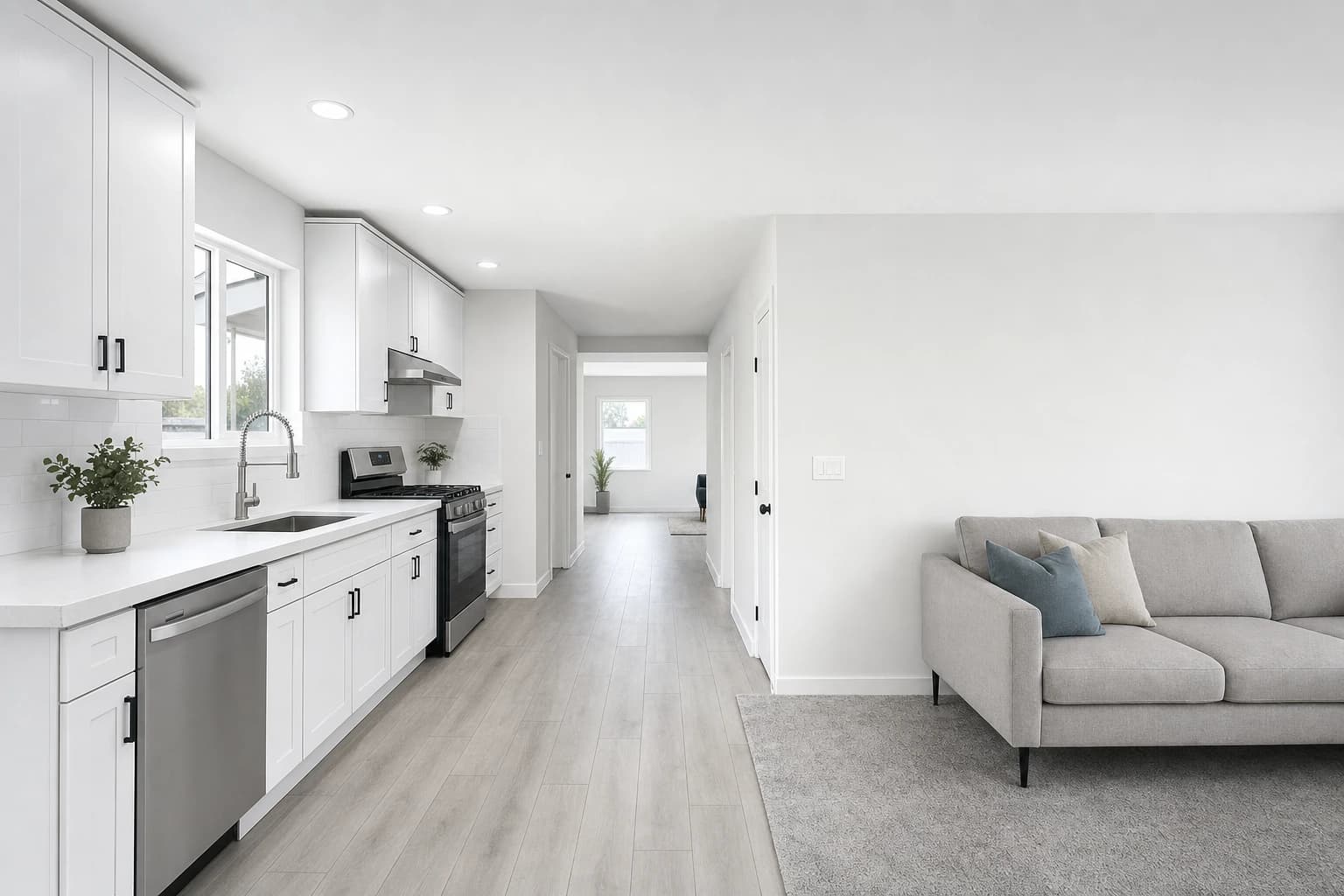
Remodeling · May 27, 2026 · 9 min read
Quartz vs. Granite vs. Butcher Block: Choosing Kitchen Countertops in Sacramento
Quartz, granite, or butcher block? Compare durability, maintenance, heat resistance, look, and real Sacramento cost ranges, plus how countertops actually get installed.
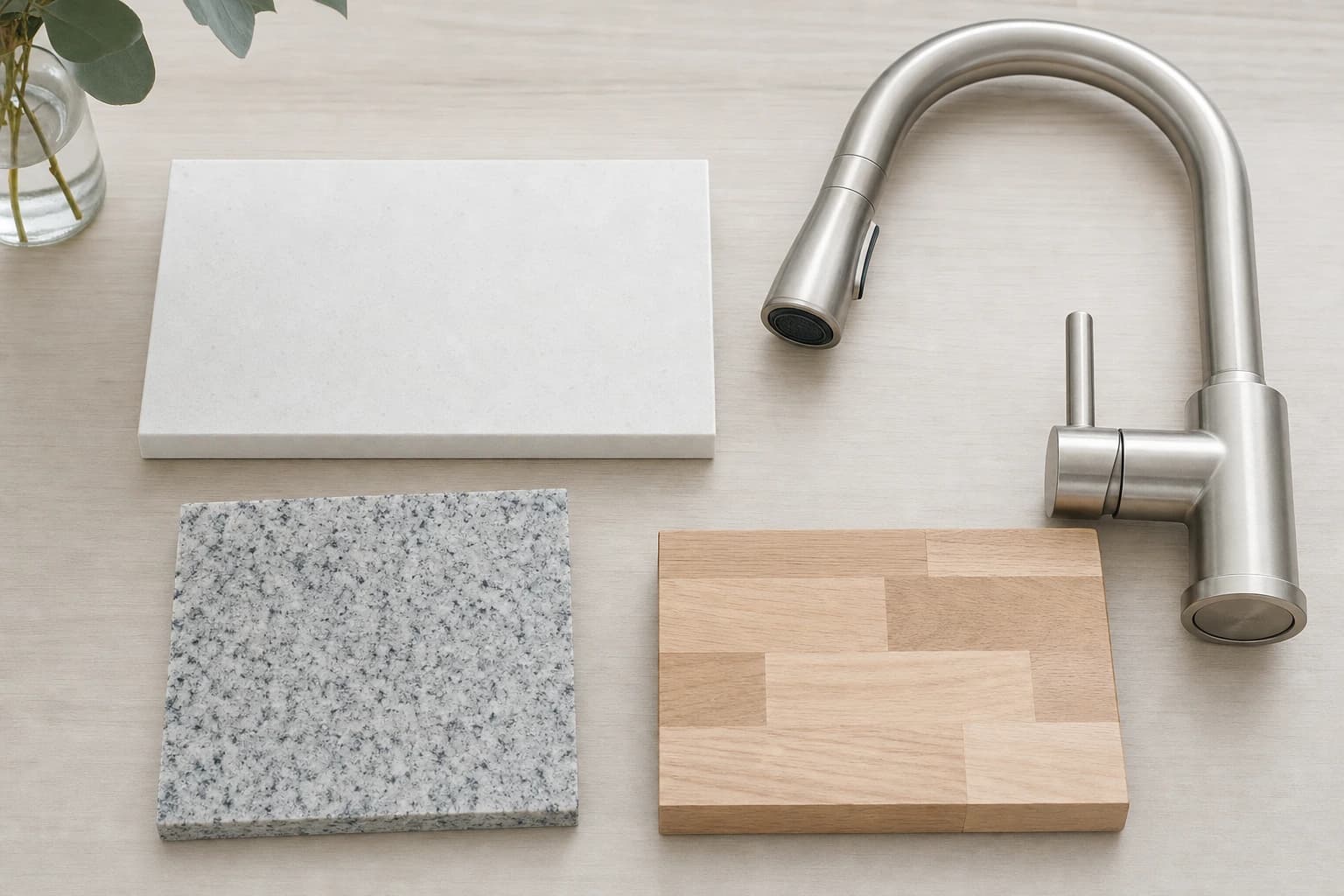
Countertops are the surface you touch every single day and one of the few kitchen finishes you live with for fifteen or twenty years. They're also where a lot of Sacramento homeowners freeze up, because the three most popular options, quartz, granite, and butcher block, behave completely differently in real life. There's no single right answer. The right counter depends on how you cook, how much upkeep you'll actually do, and what look you're after.
We're VDO Remodeling, a licensed B-2 interior remodeling contractor based in Rancho Cordova (CSLB #1107954). We template, coordinate fabrication, and install countertops for homeowners across Sacramento County, Folsom, Carmichael, Citrus Heights, Fair Oaks, and Arden-Arcade. This guide breaks down the three materials honestly, walks you through what installation day actually involves, and helps you match the surface to your lifestyle.
Quartz: The Low-Maintenance Default for Good Reason
Quartz, more precisely engineered stone, is roughly 90% crushed natural quartz bound with resin and pigment. It's the most-requested countertop in Sacramento right now, and once you understand its strengths it's easy to see why.
- Maintenance: Essentially none. It's non-porous, so it never needs sealing, and it won't stain from wine, coffee, or tomato sauce. Wipe it with soap and water and move on.
- Durability and look: Extremely hard and consistent, with no hidden fissures or soft spots and excellent scratch resistance. Modern lines convincingly mimic marble veining or concrete, and the slab you pick is the slab you get, no surprises.
- Heat resistance: This is quartz's one real weakness. The resin binder can scorch or discolor under a hot pan straight off the burner. Always use trivets.
- Sacramento cost: Typically $75 to $150 per square foot installed, depending on brand, pattern, and edge profile.
Quartz is the surface we recommend most often for busy families, anyone who wants a maintenance-free kitchen, and homeowners updating to sell. It simply asks the least of you over its lifetime.
Granite: Natural Stone With Character and Heat Tolerance
Granite fell slightly out of fashion when quartz took over, but it remains a genuinely excellent surface, and for some cooks it's the better pick. Every slab is one-of-a-kind, quarried and cut to order.
- Maintenance: Granite is porous and needs sealing, typically once a year, though many modern sealers stretch that further. A few minutes with a sealer bottle is the whole job. Skip it and you risk staining around the sink and cooktop.
- Durability and look: Very hard and scratch-resistant, with rich natural movement and variation no engineered product can fully replicate. The flip side: you have to approve your actual slab, because two pieces of the same granite can look quite different.
- Heat resistance: Excellent, and this is where granite beats quartz. A hot pot straight off the stove won't scorch a granite top. Serious home cooks notice the difference.
- Sacramento cost: Roughly $60 to $120 per square foot installed. Exotic imports and dramatic patterns push the top end.
Granite suits homeowners who cook with real heat, who love natural materials, and who don't mind a once-a-year sealing ritual in exchange for a surface that's been beautiful in kitchens for decades.
Butcher Block: Warmth, Character, and a Little Devotion
Butcher block, solid wood, usually maple, walnut, or oak, brings warmth that no stone can match. It's the one surface that gets more characterful with age rather than just older. But it asks the most of you in return.
- Maintenance: The highest of the three. Wood needs regular oiling (mineral oil or a board-cream blend), every few weeks at first, then a few times a year. It can't be left wet, so it's not ideal right around a sink unless you're diligent.
- Durability and look: Softer than stone, so it will scratch, dent, and show knife marks, but that's part of the warm, organic charm. Unlike stone, butcher block can be sanded and refinished back to new, the only repairable surface of the three. Stunning as an island or in a farmhouse or transitional Sacramento kitchen.
- Heat resistance: Poor. A hot pan will scorch wood. Trivets are mandatory.
- Sacramento cost: Generally $50 to $100 per square foot installed, with premium walnut at the upper end.
Butcher block is for the homeowner who wants warmth and texture and genuinely enjoys a little hands-on care. A popular move in our service area: quartz or granite around the perimeter, a butcher block island for prep and visual warmth.
A Word on Quartz Remnants: Premium Stone for Less
Here's an insider tip that saves Sacramento homeowners real money. When a fabricator cuts a big slab for someone else's job, the leftover pieces, called remnants, sit in the stone yard at a steep discount. If your countertop run is short, an island, a coffee bar, a small galley kitchen, you can often score a premium quartz or granite remnant for a fraction of full-slab pricing.
Remnants won't work for a large kitchen that needs matched, continuous slabs, but for compact layouts and accent counters they're one of the smartest ways to get a high-end material on a mid-range budget. We watch local stone-yard remnant racks for exactly these projects and will flag the opportunity when your layout fits.
How Countertops Actually Get Installed
Picking the material is the fun part. The reason your counters end up flat, tight to the wall, and supporting an undermount sink that won't sag is the install process, more involved than most homeowners expect. Here's how a professional countertop swap goes.
1. Tear-Out of the Old Slab
The existing countertop has to come off cleanly without damaging the cabinet boxes underneath. Old stone is heavy and usually glued and screwed down; old laminate often hides a particleboard substrate that has to come out too. We disconnect the sink and faucet, protect the cabinets, and pull the old surface so the boxes underneath are sound and level, the foundation everything else rides on.
2. Templating
Once the cabinets are bare and level, the fabricator templates, taking precise measurements of the actual installed cabinets rather than the plans. This is why countertops are templated after cabinets are set, not before. Laser templating captures every wall that isn't quite square, and in older Sacramento and Carmichael homes, very few are. The template is what the slab gets cut to, so accuracy here is everything.
3. Fabrication Coordination
The template goes to the shop, where the slab is cut, edges are profiled (eased, beveled, ogee, mitered), and sink and cooktop openings are made, usually one to two weeks. Coordinating it is a big part of the job: the cabinets must be finished, the sink on-site for the cutout, and the install scheduled so your kitchen isn't down longer than it needs to be.
4. Sink Cutouts and Undermount Support
This is where craftsmanship shows. An undermount sink (mounted below the counter for that clean, seamless look) hangs from the underside of the stone, so it needs proper mechanical support, not just adhesive. We install sink clips, brackets, or a support cradle so the sink can't drop over time under the weight of water and dishes. The cutout edges are polished and the reveal is set consistently. Done right, an undermount looks effortless; done poorly, it sags or leaks within a year.
5. Set, Seam, and Seal
The slabs are set, leveled with shims, and any seams are joined with color-matched epoxy and tooled nearly invisible, ideally placed at a sink or a natural break rather than the middle of your prep zone. Stone gets sealed if the material requires it (granite yes, quartz no), the sink and faucet are reconnected, and the backsplash is scribed tight to the wall.
A Note on Scope: What We Handle
Under our B-2 license, VDO Remodeling handles the full interior side of a countertop project: tear-out, cabinet leveling and prep, coordinating the fabrication shop, the install, reconnecting your existing sink, and the backsplash. We work within your existing footprint, walls, and plumbing. If your new layout calls for relocating the sink to a new run, brand-new water or drain lines fall under a licensed plumbing specialty (C-36), and removing a load-bearing wall to open the kitchen requires a B general or a structural engineer. When your project needs those, we bring in the right licensed contractor rather than working outside our classification, and we'll be clear about what falls inside our scope at the consultation.
Choosing by Lifestyle: A Quick Guide
- You want zero maintenance and a clean, consistent look: Quartz. It never needs sealing, shrugs off stains, and looks the same in year ten as day one. Just keep trivets handy.
- You're a serious cook who uses real heat and loves natural stone: Granite. It takes a hot pan without flinching and every slab is unique, in exchange for a once-a-year seal.
- You want warmth and texture and don't mind the upkeep: Butcher block, often as an island paired with stone perimeters.
- You have a small kitchen, island, or coffee bar and a tight budget: Ask about quartz or granite remnants before settling for laminate.
- You're updating to sell: Quartz. Sacramento buyers read it as modern and move-in ready, with no maintenance question at the open house.
Let's Find the Right Surface for Your Kitchen
The material gets the attention, but the finish quality lives in the details: seams placed where you won't notice them, a properly supported undermount sink, an edge profile that suits the kitchen, and a tear-out that leaves your cabinets sound. Those are the things you stop noticing precisely because they were done right, and they're the difference between a counter that looks great on install day and one that still looks great a decade later.
There's no universally best countertop, only the one that fits how you actually cook, clean, and live. A short in-home conversation about your cabinets, layout, and sink plans gets you a clearer answer than any showroom sample. VDO Remodeling has been installing countertops and remodeling kitchens across Sacramento County, Folsom, Rancho Cordova, Carmichael, Citrus Heights, and Fair Oaks for years, as a licensed, fully insured B-2 interior remodeling contractor that prices every project line by line.
Ready to choose the right countertop for your kitchen? Call or text VDO Remodeling at (916) 232-5571 for a free, no-obligation in-home consultation. Licensed, insured, CSLB #1107954.