Remodeling · June 1, 2026 · 9 min read
LVP vs. Tile vs. Engineered Hardwood: A Sacramento Flooring Guide
Luxury vinyl plank, porcelain tile, or engineered hardwood? Here's how the three best flooring options for Sacramento homes compare on waterproofing, durability, warmth, and cost, and where each one actually belongs.
New flooring is one of the few remodel decisions that touches every room you walk through. It sets the tone for the whole house, takes daily abuse from kids, pets, and chairs, and either makes or breaks how a kitchen or bath reads. It's also the material choice where Sacramento homeowners get the most conflicting advice.
Three options dominate the conversation right now: luxury vinyl plank (LVP), porcelain tile, and engineered hardwood. All three can look fantastic, but they behave very differently underfoot, around water, and over a Sacramento year that swings from 105-degree summers to cool, conditioned winters. Picking the right one for the right room is what separates a floor you love for fifteen years from one you regret by year three.
We're VDO Remodeling, a licensed B-2 interior remodeling contractor based in Rancho Cordova (CSLB #1107954), and we install all three of these floors regularly for homeowners across Sacramento County, Folsom, Carmichael, Citrus Heights, and Fair Oaks. Here's how they compare, where each one fits, and the prep details that quietly decide whether your new floor lasts.
The Three Contenders at a Glance
None of these is "best" in a vacuum. The best one is the one that matches the room and how you live in it.
- Luxury vinyl plank (LVP): Fully waterproof, warm and quiet underfoot, forgiving over imperfect subfloors, and the value leader. The everyday workhorse.
- Porcelain tile: The most durable and most waterproof surface you can install, nearly impossible to scratch or stain, but hard and cold underfoot. The long-haul champion for wet rooms.
- Engineered hardwood: Real wood on top, a dimensionally stable plywood core underneath. The warmth and resale appeal of hardwood, with better tolerance for Sacramento's humidity swings than solid wood. The premium choice for living spaces.
Waterproofing: Where the Three Diverge Most
This is the most important question, and it's where the materials separate hard. Sacramento homes deal with dishwasher leaks, kid bath splashes, the occasional ice-maker line, and pets. How a floor handles standing water should drive your room-by-room choices.
- LVP is waterproof through and through. Quality rigid-core products (SPC and WPC) won't swell, stain, or damage when water sits on them, which is why they've taken over kitchens and laundry areas. One honest caveat: the plank is waterproof, but water that slips under it through gaps can still sit on the subfloor, so installation and transitions matter.
- Porcelain tile is the gold standard for wet rooms. Fired dense and hard, it absorbs almost no water. Paired with a properly waterproofed substrate and good grout, it's the right answer for shower floors, full bathrooms, and anywhere water is a regular event. The grout is the weak point, not the tile, which is why sealing it matters.
- Engineered hardwood is water-resistant, not waterproof. Its stable core handles a quick spill far better than solid wood, but a wet bath mat left for a week or a slow leak will still damage it. We recommend it for living rooms, bedrooms, and hallways, and steer homeowners away from full bathrooms.
Durability and Warmth: Living With the Floor
Durability and comfort pull in opposite directions, which is exactly why one floor rarely wins every room.
- Porcelain tile is the most durable surface, period, shrugging off scratches, pet claws, dropped pans, and sun for decades. The trade-offs: a heavy impact can chip it, and it's hard and cold underfoot, wonderful in July, less so on a January morning. If you love tile's toughness but not the chill, in-floor radiant heat is a genuine bathroom luxury we can plan in.
- LVP has a tough wear layer that resists scratches and dents well, the top pick for homes with big dogs and busy kids (look for 20 mil in high-traffic homes versus 6-12 mil for light use). It's also the warmest and quietest of the three underfoot, with a little give that's easy on the legs while you cook.
- Engineered hardwood sits in the middle: the real-wood veneer scratches like any wood, but a quality finish resists daily wear and most can be refinished once or twice. Its edge over solid hardwood is the stable core, which resists the cupping and gapping our seasonal humidity swings cause in solid planks, plus the genuine-wood warmth buyers respond to.
What Each One Costs in the Sacramento Market
These are realistic installed ranges for our area, materials plus labor. Where you land depends on product quality, how much subfloor prep the room needs, and layout complexity.
- Luxury vinyl plank: roughly $6 - $12 per square foot installed. The value leader; premium rigid-core products sit at the top.
- Porcelain tile: roughly $10 - $20 per square foot installed, more for large-format or intricate patterns. Labor is a bigger share here because tile is skilled, time-intensive work.
- Engineered hardwood: roughly $10 - $22 per square foot installed, depending on species, veneer thickness, and plank width. Wide-plank European oak sits at the premium end.
A floor calculator gets you in the ballpark, but the number that matters includes your subfloor's real condition, which no online tool can see.
Room by Room: Where Each Floor Belongs
- Kitchens: The toughest room for flooring, with water, dropped objects, and heavy traffic. LVP is the most popular pick for good reason, and porcelain tile is the premium-durability choice if you don't mind the hardness. We rarely recommend engineered hardwood in a busy kitchen unless you want a continuous wood look flowing from an adjacent room.
- Bathrooms: Full baths belong to porcelain tile, the only one of the three appropriate on a shower floor. LVP is a fine budget option for a powder room with light water exposure. Engineered hardwood does not belong in a full bath.
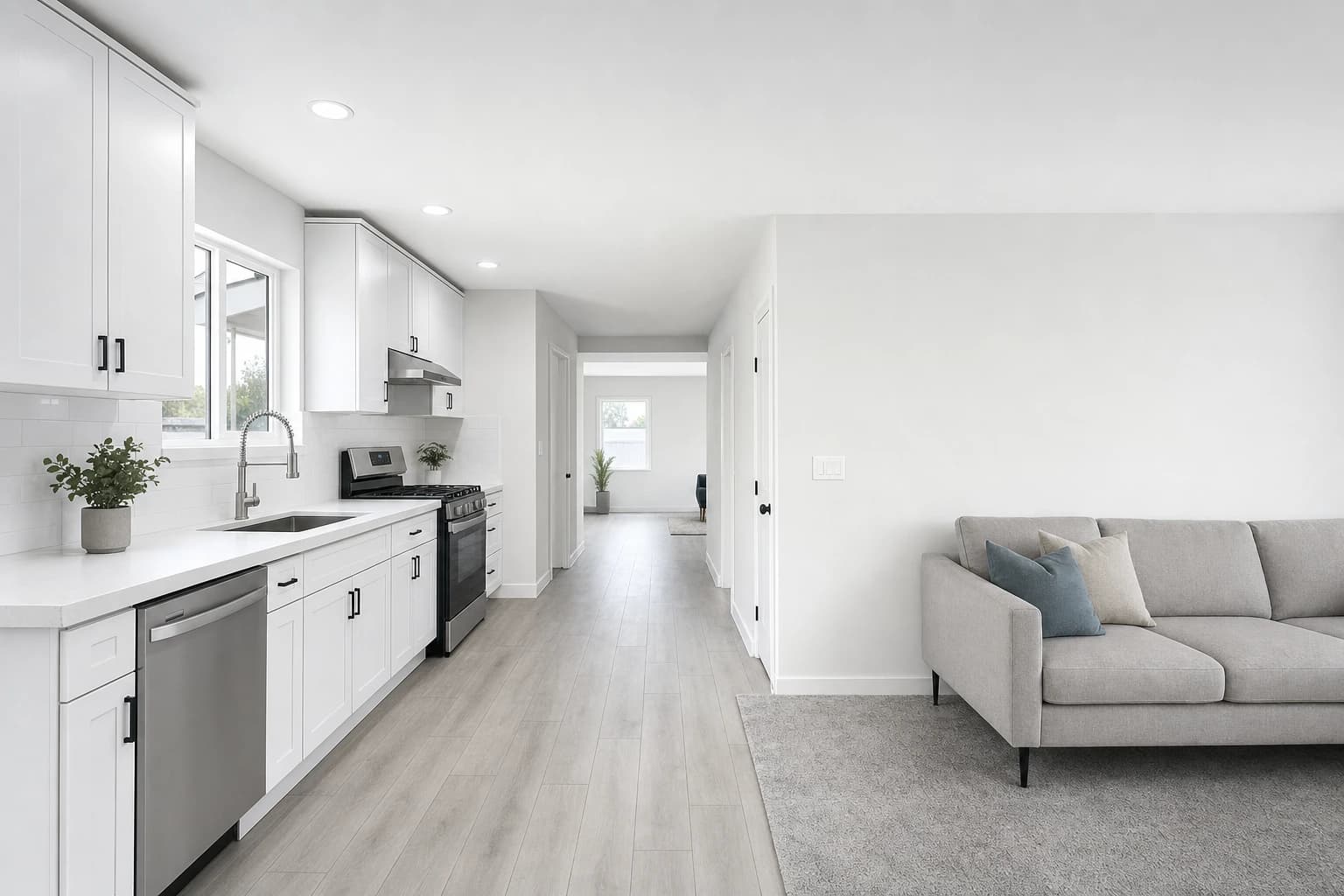
- Whole-home and living spaces: For bedrooms, living rooms, and hallways you're choosing on feel and resale. Engineered hardwood delivers the warmth and buyer appeal that move a home in Folsom or Fair Oaks; LVP gives you a convincing wood look and full waterproofing at a lower price across a lot of square footage, which is why many Sacramento homeowners run one continuous LVP floor through the whole main level.
The Details That Separate a Good Install From a Bad One
Here's the part most homeowners never hear about until something goes wrong. The flooring product is maybe half the story. The prep and the finish details are the other half, and they're where craftsmanship shows.
Subfloor Prep: The Step You Can't See but Always Feel
Every one of these floors is only as good as what's underneath it. A subfloor that isn't flat, clean, dry, and sound telegraphs every flaw upward. With LVP, dips and bumps make planks flex, click apart, and squeak. With tile, an out-of-flat or deflecting subfloor leads to cracked tiles and failed grout. With engineered hardwood, a subfloor that's too damp or uneven causes squeaks and movement. Proper prep, grinding high spots, filling low spots with self-leveler, checking moisture, and securing loose subflooring, is unglamorous and essential. Skip it to save a day, and you pay for it for years.
Transitions and Shoe Molding
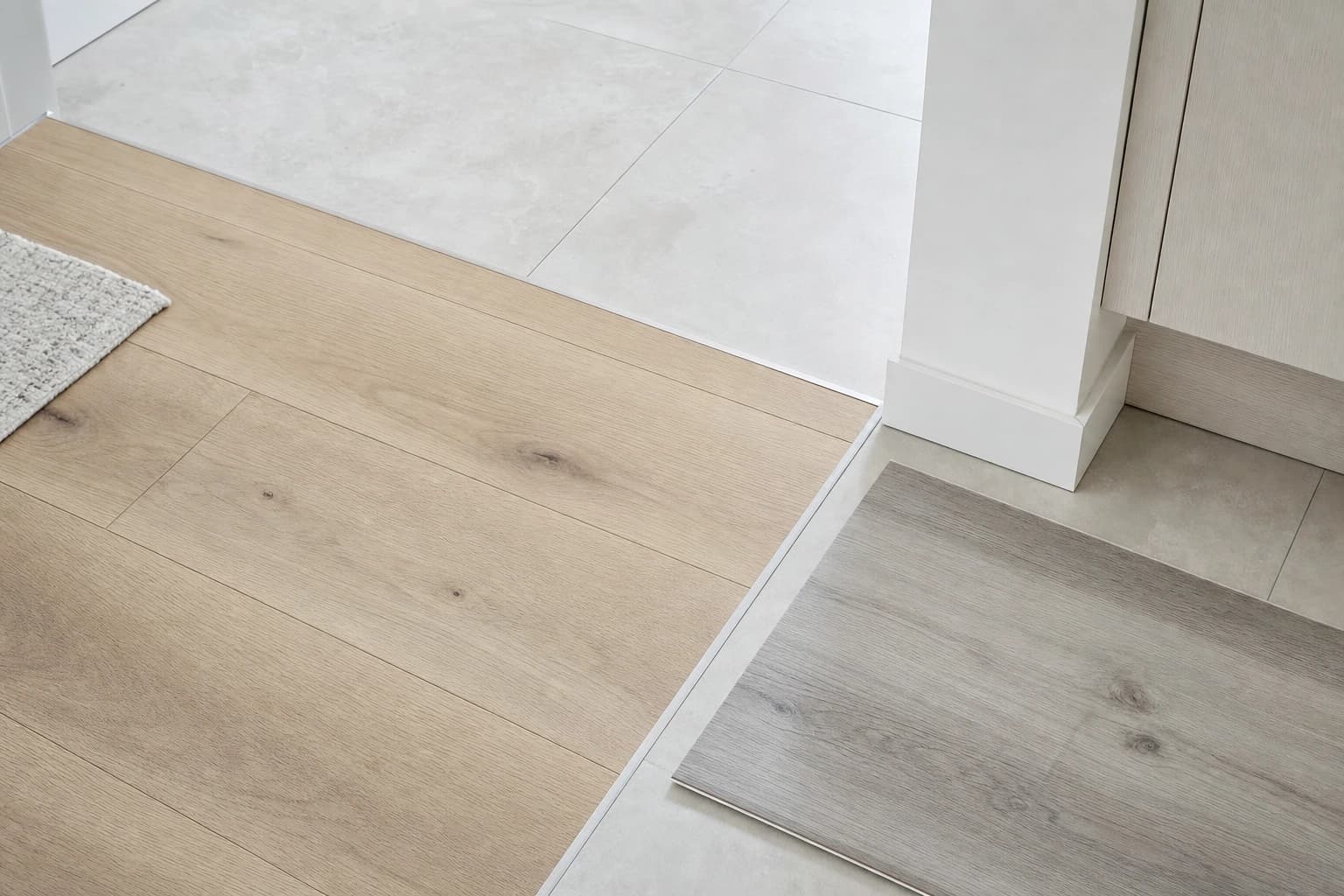
The seams where one floor meets another are where amateur jobs reveal themselves. Good transitions are planned, not improvised: the right T-molding or reducer between rooms, a clean threshold at the bathroom door, and careful height matching where LVP meets tile so you don't catch a toe. The perimeter matters just as much. LVP and engineered hardwood are floating, expansion-tolerant floors that need a gap around the room to move as temperature and humidity shift, and Sacramento gives them plenty of both. That gap can't show, so the clean solution is shoe molding or quarter-round at the base of the wall (or resetting the baseboard) to keep the edge crisp while the floor moves freely. Caulk a floating floor tight to the wall and you'll get buckling by the next hot stretch.
Acclimation
Wood and many vinyl products need to sit in the home for a few days before install so they adjust to your interior's temperature and humidity. Skipping acclimation in our climate is a common cause of gapping and buckling later. It costs nothing but patience, so we build it into the schedule.
Keeping Dust Out of the Rest of Your House
Flooring work, especially demo of old tile or grinding a subfloor flat, is one of the dustiest jobs in remodeling. Fine silica dust from cutting tile and concrete travels everywhere if you let it, into HVAC returns, onto furniture two rooms away, into closets you never opened. A floor done right shouldn't cost you a week of cleaning the whole house afterward. Protecting the rest of your home takes discipline: we seal off the work zone with plastic containment, cover adjacent floors and furnishings, use vacuum dust collection on tile saws and grinders, run air scrubbers where they help, and mask off HVAC registers so the system doesn't pull dust through the house. It's a fair question to ask any contractor before they start tearing out a floor.
A Note on Scope and Honesty
Under our B-2 license, flooring is right in our wheelhouse: demo and haul-off, subfloor repair and leveling, moisture checks, install of LVP, tile, or engineered hardwood, transitions, baseboard and shoe molding, and the finish details that make a floor look built-in rather than installed. We work within your existing layout and structure. If a floor reveals a bigger issue underneath, a subfloor problem tied to a plumbing leak, or a structural concern, we'll tell you plainly and bring in the right licensed specialty contractor rather than paper over it. Straight answers are how we'd want to be treated, so it's how we work.
Picking the Right Floor for Your Sacramento Home
If you remember nothing else: LVP for waterproof, comfortable, value-driven floors and busy households; porcelain tile for bathrooms, wet rooms, and maximum durability; engineered hardwood for the warmth and resale appeal of real wood in living spaces. Many homes we work in across Sacramento, Folsom, Carmichael, Rancho Cordova, Citrus Heights, and Fair Oaks end up with a smart mix, tile in the baths and one continuous floor flowing through the rest. The product matters, but the prep, transitions, molding, and dust control matter just as much, and that's the part you're really hiring a contractor for.
Trying to decide which floor fits your home and budget? Call or text VDO Remodeling at (916) 232-5571 for a free, no-obligation, in-home consultation. We're a licensed B-2 interior remodeling contractor (CSLB #1107954) in Rancho Cordova, serving Sacramento County, and we'll give you honest, line-item pricing, no pressure.